Contact:gilson.brito@flowbuystore.com


Healthy Foods for Energy

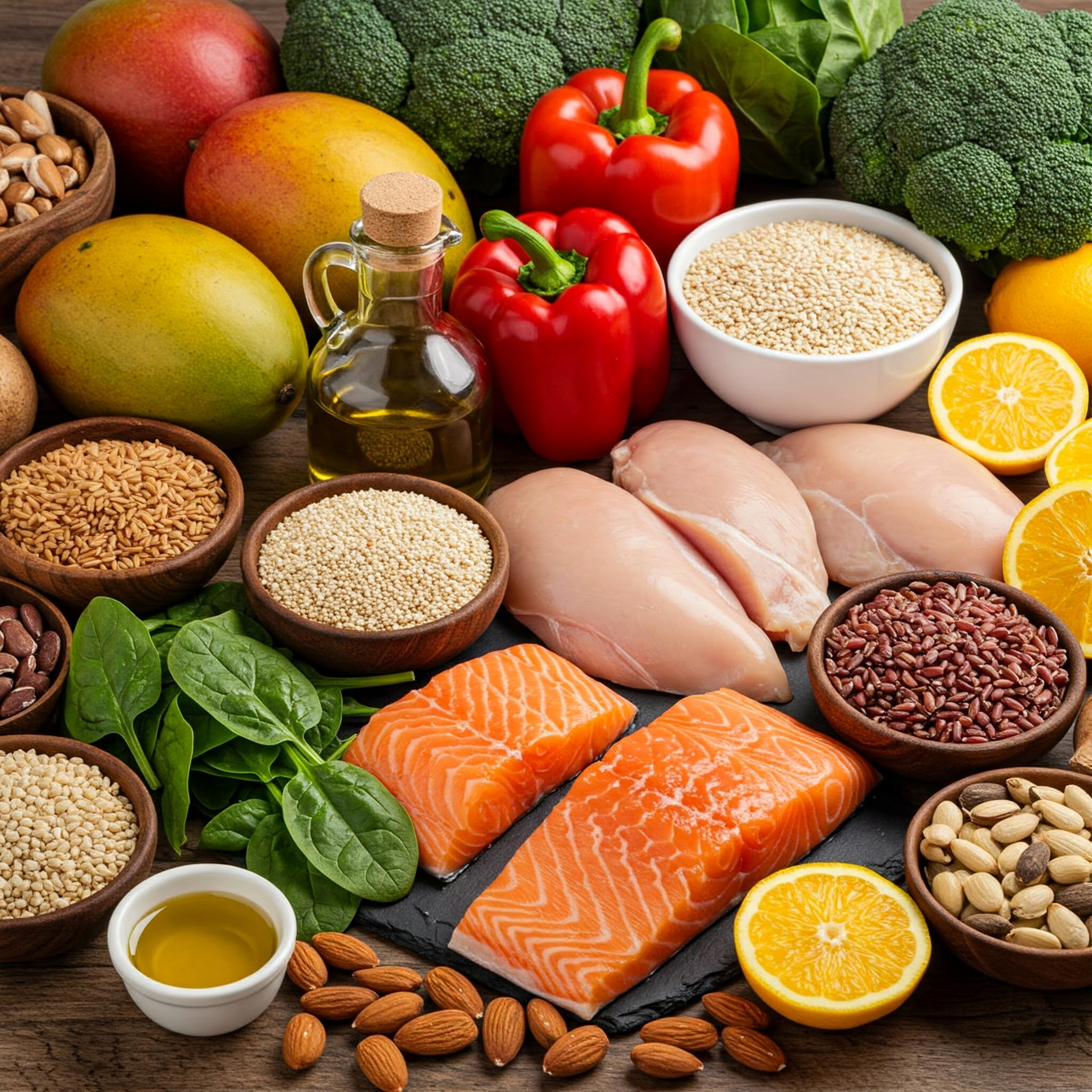
For a healthy and energetic week, the ideal approach is to focus on a balanced diet rich in nutrients. Here are some food groups and examples that can help you, with references to their mentioned benefits in research:
1. Complex Carbohydrates: Provide gradual and sustained energy throughout the day.
- Whole grains: Brown rice, oatmeal, quinoa, whole wheat bread.
- Tubers: Sweet potato, cassava.
- Legumes: Beans, lentils, chickpeas.
- Reference: Complex carbohydrates are digested more slowly, releasing energy gradually. Oatmeal, for example, is rich in complex carbohydrates and fiber, helping to keep blood sugar levels stable.
2. Lean Proteins: Essential for muscle building and repair, and also contribute to satiety.
- Poultry: Chicken breast, turkey breast.
- Fish: Salmon, tuna, white fish.
- Eggs: An excellent source of protein.
- Legumes: Beans, lentils, chickpeas.
- Low-fat dairy: Cottage cheese, natural yogurt.
- Reference: High-quality proteins help sustain energy levels. Eggs, for example, contain B vitamins, crucial for energy metabolism.
3. Healthy Fats: Important for hormonal health, vitamin absorption, and providing long-term energy.
- Avocado: Rich in monounsaturated fats.
- Nuts: Cashews, almonds, walnuts.
- Seeds: Chia seeds, flaxseeds.
- Extra virgin olive oil.
- Fatty fish: Salmon.
- Reference: Avocado provides lasting energy due to its healthy fats. Nuts contain nutrients that help in energy production.
4. Fruits and Vegetables: Rich in vitamins, minerals, fiber, and antioxidants, essential for overall health and energy.
- Fruits: Banana, apple, citrus fruits.
- Vegetables: Dark leafy greens, broccoli, carrots, beets.
- Reference: Fruits and vegetables provide vitamins, minerals, and fiber, important for various bodily functions. Beets, for example, can increase energy levels.
5. Hydration: Fundamental for all bodily processes, including energy and alertness.
- Water: Essential for hydration.
- Teas and natural juices: Without added sugar.
Additional Tips:
- Avoid ultra-processed foods: They are generally low in nutrients and can cause energy spikes followed by crashes.
- Moderate the consumption of refined sugars: Can lead to blood sugar spikes and subsequent energy dips.
- Maintain regular meal times: Helps regulate energy levels throughout the day.
- Don’t skip meals: Especially breakfast, which can provide energy to start the day.
By including a variety of these foods in your meals throughout the week, you will be providing your body with the necessary nutrients to feel healthy and energetic. Remember that balance and moderation are key. If you have specific questions about your diet, it is always recommended to consult a nutritionist.
References:
- [Abbott] Abbott Brasil. Nutrição (Nutrition). https://www.google.com/search?q=https://www.abbott.com.br/nutricao.html
- [Amigos Múltiplos] Amigos Múltiplos por Esclerose (AME) (Multiple Sclerosis Friends). Alimentação e Esclerose Múltipla (Nutrition and Multiple Sclerosis). https://www.google.com/search?q=https://amigosmultiplos.org.br/alimentacao-e-esclerose-multipla/
- [dr.consulta] dr.consulta. Alimentos ultraprocessados: o que são, exemplos e como evitá-los (Ultra-processed foods: what they are, examples and how to avoid them). https://www.google.com/search?q=https://drconsulta.com/blog/alimentos-ultraprocessados/
- [FASTNFIT] FASTNFIT. Dicionário de alimentos (Food Dictionary). https://www.google.com/search?q=https://www.fastandfit.pt/dicionario-de-alimentos
- [iFood] iFood. Blog iFood. https://blog.ifood.com.br/
- [Lowçucar] Lowçucar. Dicas Lowçucar (Lowçucar Tips). https://www.google.com/search?q=https://lowcucar.com.br/dicas-lowcucar/
- [Medical News Today] Medical News Today. Complex carbohydrates: Health benefits and food sources. https://www.medicalnewstoday.com/articles/321462
- [Pratique Fitness] Pratique Fitness. Blog Pratique Fitness. https://www.google.com/search?q=https://www.pratiquefitness.com.br/blog/
- [Terra] Terra. Vida e Bem-Estar (Life and Well-being). https://www.terra.com.br/vida-e-estilo/saude/
- [Tia Sônia] Tia Sônia. Blog. https://www.google.com/search?q=https://www.tiasonia.com/blog/
- [UNG] UNG – Universidade de Guarulhos (University of Guarulhos). A importância de uma alimentação saudável (The importance of healthy eating). https://www.google.com/search?q=https://www.ung.br/noticias/a-importancia-de-uma-alimentacao-saudavel/